The Roslin Institute: Stem cell protein may boost cultivated fat production
A protein has been found to be associated with animal stem cells that produce fat, potentially boosting efficiency of cultivated fat that could be used as a novel food supplement
 22 April 2026
 1 minute read
 By:
By: A key protein found in stem cells could improve animal fat production, research has found.
Roslin researchers examined stem cells taken from cattle to distinguish those with a strong capacity to become fat, which could increase the efficiency of cultivated fat production.
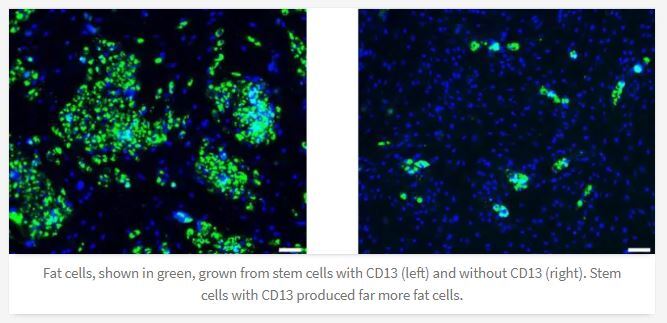
Using advanced genetic analysis, the team found that cells carrying a surface protein known as CD13 were far more likely to develop into fat cells than those without it.
Cells with this marker produced, on average, more than 10 times as much fat as cells without it, while retaining the ability to grow and be handled in the lab in similar ways.
The research team suggests that selecting stem cells with a strong capacity to produce fat could among other things reduce costs associated with lab-grown meat, making it easier to scale up for commercial use.
Boosted efficiency
The findings could inform new approaches to producing meat and other foods in which fat is essential for taste, texture and cooking qualities, while tackling the high costs and inefficiencies that currently limit large-scale cultivated meat production.
Current methods rely on mixed populations of stem cells, only a small proportion of which are able to develop into fat cells, limiting how much fat can be made, the team explains.
Using a technique known as flow activated cell sorting, which detects and isolates cells based on properties such as proteins found on cell surfaces, researchers were able to pinpoint the stem cells most likely to develop into fat.
The method currently relies on specialized equipment, although simpler, more cost-effective approaches could be developed for industry. The technique could also potentially be adapted for use in other species and cell types, the research team notes.
The work was published in NPJ Science of Food, supported by Innovate UK, Roslin Technologies, and Edinburgh Innovations, the University’s commercialization service.
"By identifying a marker that tells us which stem cells will become fat, we can now selectively grow the cells that produce fat in the lab. This not only produces more fat from fewer cells, but also brings us closer to scaling up cultivated fat for use in meat and other foods without relying on animals," said Professor Xavier Donadeu, lead author of the study.