Efficiency is sustainability: C-Lock brings science-backed data to beef production
GreenFeed technology and real-time analytics monitors methane flux and improves feed efficiency and profitability
 3 June 2026
 4 minute read
 By:
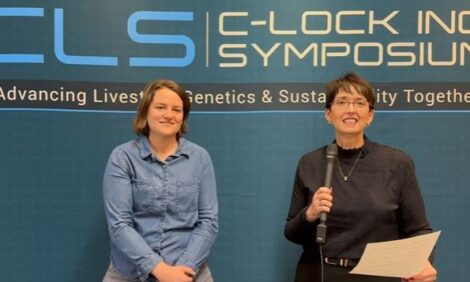
By: Dan Paca, chief revenue officer at C-Lock, spoke to The Cattle Site’s Sarah Mikesell at the 2026 NCBA’s CattleCon in Nashville, Tennessee, USA.
Tell us about C-Lock and the solutions you offer.
We are a privately owned company out of Rapid City, South Dakota, USA, and we're primarily a data company. We manufacturer equipment that collects individual animal emission collection and data. We can measure methane, carbon dioxide, hydrogen and oxygen. We also have performance monitoring equipment, which captures individual animal feed intake, water intake and average daily scale weights.
How can C-Lock link performance improvement to sustainability?
Our concentration and focus has to be on the producer. We need to improve the beef industry. We need to increase efficiency for producers, and you really can't make those adjustments unless you are doing the measurements.
With our equipment, we can measure what the individual animal eats every time he goes in and eats, every time they drink and when they're getting weighed. Our new dashboard will show what the average daily feed intake is, what the average cost per pound of gain is, all that data is at your fingertips every day.
But what really matters is what you do with that information. We create so much data in the world today. We provide a dashboard that allows you to make the management decisions on your farm to be more profitable.
We're really excited about it because you can have two 1,300-pound steers that look identical in the same pen. One of them might have a 10:1 feed conversion, and one of them might have a 6:1 feed conversion.
In the state of Iowa, where I am from, with the feed cost today, that's about a $220 difference in profitability to the producer. So if we can come in, take these measurements and help the producer make better genetic selections, better nutrition decisions with different feedstuffs - any of those changes that take an animal from a 10:1 to a 6:1, you're going to put over $200 more per head in your pocket.
Has data become the name of the game?
It is. There is an awful lot of data and what you do with the data is important. It can help a producer become a sustainable partner in the beef industry.
However, sustainability sometimes has a negative connotation in the industry. For example, if I came to your farm and explained that if we can measure your genetics where you would make some changes to take your bottom 30% of performers and move them up to be your top 30% performers. Or if I could take measurements and show you that if you used your hay in a different part of your farm, but in your finishing animals, you should bring different feed stuffs in, or if I could even tweak your nutrition. If I gave you the data where you could make those decisions and it would put $200 more per head in your pocket, you'd probably listen to me.
But if I came to your farm and said I can make you more sustainable and help you put $200 more per head in your pocket, you'd probably tell me to get off your farm.
That's what we have to change – because what people don't realize is that the more efficient you are on your farm, the more sustainable you are. With a measurement of CO2 with our GreenFeed system, we can correlate the CO2 loss into the atmosphere.
That's energy loss – every time more CO2 leaves the animal’s body, your animal is less efficient. It's not making meat; it's not making milk. That's the exciting thing about what we do and the science that we've brought to the industry.
At C-Lock, we are involved in 49 countries around the world, and we've been involved in research in product development, program development and now genetic development. If we can improve all of those things, we're making producers more efficient, we're making beef more consistent, and we're also being more sustainable to the environment.
Does C-Lock work with both the beef and dairy industries?
Absolutely, we work with any ruminant. We're measuring flux, not concentration. So, when the animal eructates, we're taking that measurement. We can make genetic improvements on beef, dairy, sheep, goats - any ruminant. That's the sector that we work in.
Does C-Lock offer efficiency beyond feedlot production?
We work with a lot of genetic companies and seed stock producers. We can measure the seed stock and measure their offspring. We can go to a farm and point out the cow that's been on that farm and her calf that has been the most efficient calf the last three years out of hundreds of heads of cows.
We really appreciate being part of the science and the data that can help separate the assumptions and the modeling that goes on. When we can get to true science, that's what we do, and that's when everybody wins.
Has your data gathering technology been used in a research context?
Yes, our equipment and technology have been used in over 600 published papers. Dr. Patrick Zimmerman is our founder, and he was an atmospheric scientist, working in academia all those years and has been doing these types of measurements since the 1970s. We’re doing true science and true research, and we get to work with so many great people in academia and with producers to help their research be successful.