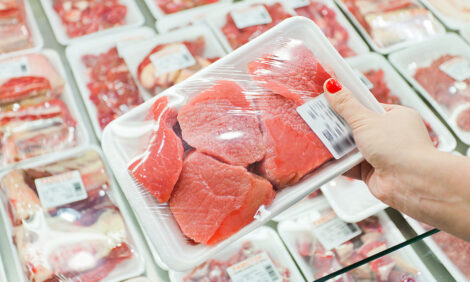
AgNext explores genetics and methane efficiency in beef cattle
Dr. Sara Place is studying why some cattle naturally produce less methane while maintaining strong feed efficiency
 8 July 2026
 8 minute read
 By:
By: At Colorado State University, researchers at AgNext are working to better understand one of the cattle industry’s most closely watched sustainability challenges: methane emissions. Using advanced monitoring tools such as the C-Lock GreenFeed System, scientists are collecting detailed data on how cattle produce methane and how genetics, nutrition and management may help reduce emissions without sacrificing productivity.
Dr. Sara Place, associate professor of feedlot systems at Colorado State University, said AgNext approaches sustainability through a broad lens that combines animal performance, economics and environmental outcomes.
“AgNext is a research collaborative at Colorado State University, and we look at and research sustainability in animal agriculture to find practical, sustainable solutions for animal agriculture,” said Place.
That practical focus shapes much of AgNext’s methane research, which centers on accurately measuring emissions from beef cattle and identifying realistic mitigation strategies producers can implement commercially.
“My research is mostly focused on measuring flux and mitigating enteric methane emissions from cattle production systems, specifically beef cattle for the most part,” Place said. “In terms of making a difference, it starts with baselining where we actually are at.”
Updating methane measurements for modern cattle systems
According to Place, many historical estimates of cattle emissions are based on data collected decades ago. AgNext researchers are working to update those baselines using modern equipment now with the capability to accurately measure individual animals in commercial production environments.
Historically, methane measurements relied heavily on respiration chambers, where cattle were isolated inside enclosed systems that captured all gases produced by the animal.
“We've been measuring methane from cattle since the late 1800s,” Place said. “The respiration chambers were great from a precision standpoint, as long as the equipment was working well, but putting an animal by itself into a chamber – it’s just not a normal environment and can change their behaviors.”
Researchers also experimented with partial chambers and head boxes that measured methane emitted from the animal’s mouth. However, those systems still altered animal behavior and feeding patterns.
Building the Climate-Smart Research Facility
AgNext’s collaboration with C-Lock has helped the Colorado State research team rapidly expand its methane research capabilities. At the center of that work is AgNext’s research facility, which combines methane monitoring equipment with feed intake and animal performance technologies.
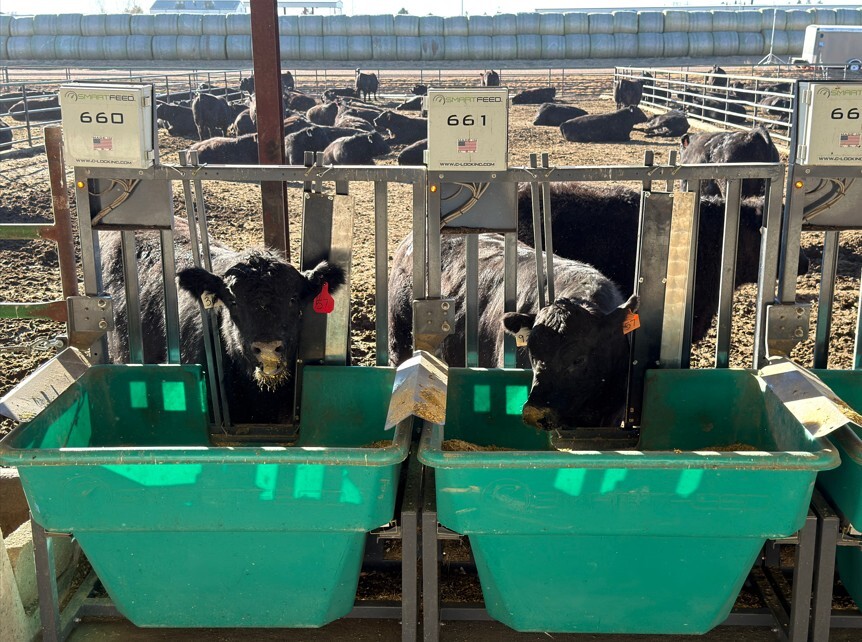
“At our Climate Smart Research Facility, we have 30 SmartFeeds, which are individual feed intake units, and six GreenFeed untis,” Place said. “We're able to measure up to 300 animals at one time in terms of understanding their feed intake and feeding behavior while also measuring growth performance and gas flux from the animals themselves.”
In addition to feedlot-based systems, AgNext researchers are also collecting methane data in grazing environments.
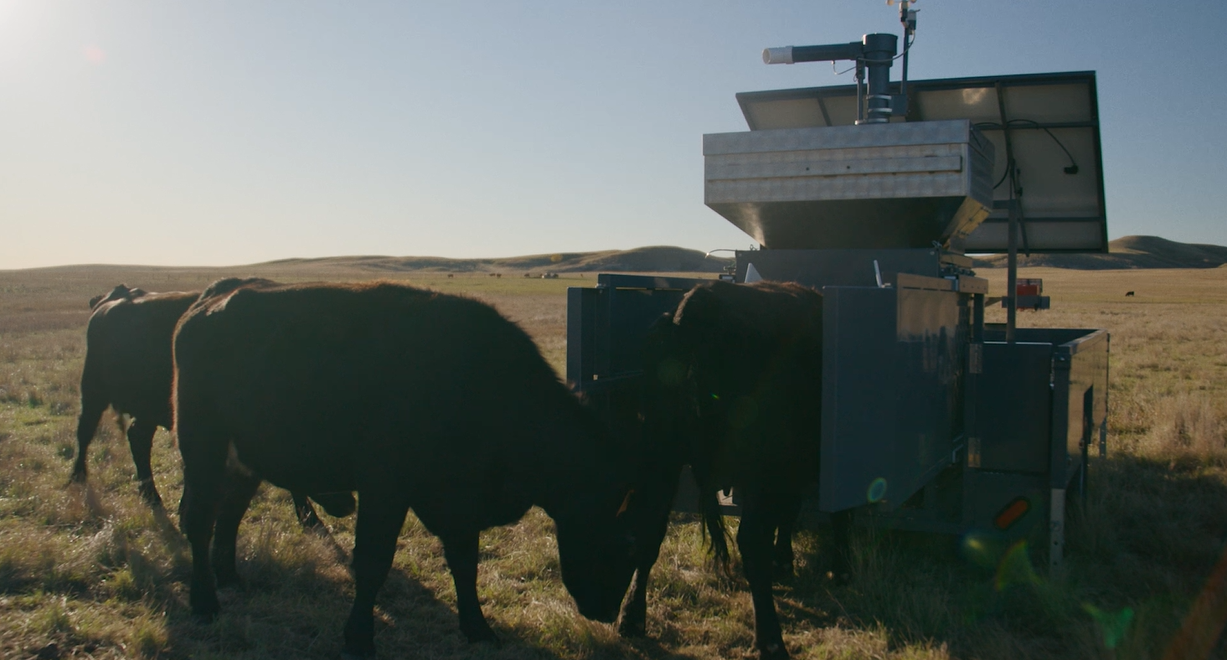
“We have two GreenFeeds on pasture trailers, so we're doing work all the time in terms of assessing animals in more grazing extensive environments as well,” Place said.
Why AgNext partnered with C-Lock
The GreenFeed System developed by C-Lock offered researchers a new way to measure methane emissions without disrupting normal cattle behavior. The system functions more like an automated feeding station where cattle voluntarily visit the unit to consume small amounts of feed while methane emissions are measured.
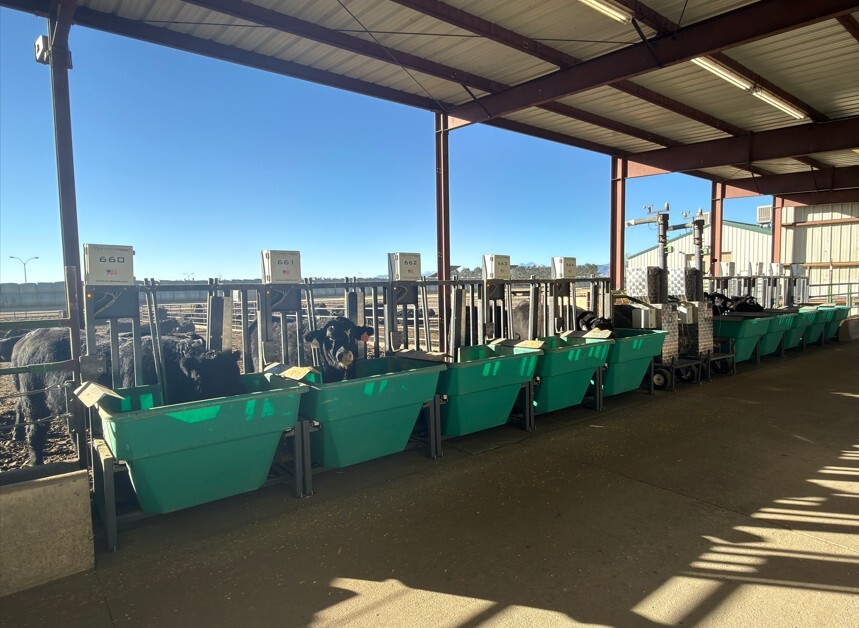
“From the animal's perspective, they're just free-living with their pen mates,” Place said. “They're eating as they normally would. They have no idea they're participating in research.”
That ability to capture methane data in commercially relevant environments is one of the main reasons AgNext partnered with C-Lock.
“In terms of how cattle are interfacing with the GreenFeed units, for them it’s just a snack machine that's giving them some alfalfa pellets,” Place said. “For us, it's a key advantage – we don't restrict the animal's movement or behavior in any way, and we're able to passively assess methane emissions.”
Understanding cattle variation in methane production
As AgNext researchers collect methane data from larger populations of cattle, they are learning that emissions vary considerably between animals, even when cattle are managed similarly.
“Especially when we measure them more in that free-living environment compared to a chamber, we see more of the variation express itself in the animal population,” said Place.
Variation is one of the most important questions driving AgNext research today.
“Typically, in cohorts of animals with the same feed intake, eating the same diet, managed the same way can have 30% differences in methane emissions,” Place said. “The big question is why?”
Researchers believe multiple factors contribute to those differences, including the rumen microbiome, animal behavior and digestive function, just to name a few.
“Methane emissions themselves are coming from microbial action,” Place said. “But there's a whole host of things that may be driven by the animal, like how much saliva they're producing, how frequently they're eating, how fast the rate of passage is through their digestive tract.”
The integration of methane measurements with genomics and microbiome tools is opening entirely new areas of investigation.
“When we combine that with different genomics tools or tools to actually understand what, from a rumen microbiome perspective, is actually there and what they're doing, that opens up a whole host of questions,” Place said.
Genetic selection and methane mitigation
One major area of focus at AgNext involves genetic selection. Researchers hope to identify cattle that maintain strong growth and feed efficiency while naturally producing lower methane emissions.
“We're interested in this especially because most of the methane is coming from grazing animals,” Place said. “If we have a way through genetic selection to create permanent and cumulative reductions in emissions that don't rely on an input cost that the farmer is continuously paying like a feed additive, that could be a great solution.”
Researchers are also evaluating how breed differences influence methane production and feed efficiency across various production systems worldwide.
“There are definitely breed differences and species differences like sheep versus cattle,” Place said. “The answer in terms of which is “best” is not going to be the same everywhere.”
That diversity is one reason researchers emphasize the importance of balancing methane reduction with economically important production traits.
“It's so important that we actually measure these things like methane emissions but also do so while paying attention to feed intake, growth performance and how adaptable animals are to their environment,” Place said. “Because we have to be holistic when we think about this and not just solely select for one trait.”
Looking ahead, AgNext researchers hope to begin incorporating methane traits directly into breeding decisions within their research herd.
“Our goal is to find those outliers that are good outliers,” Place said. “Those unicorns that gain well, still eat well, perform well and are healthy robust animals, but they also make less methane.”
Feedlots, forage diets and methane efficiency
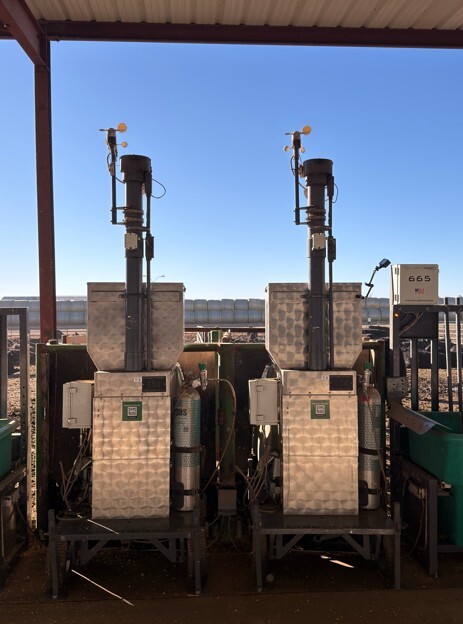
One of the more surprising findings to some is that feedlot cattle often produce less methane than cattle on pasture consuming forage-based diets. Place explained that methane production is strongly linked to dietary fiber levels and rumen fermentation patterns.
“Animals that are eating a higher grain diet make less methane per day, especially less methane per unit of feed that they eat compared to animals that are grazing or eating 100% forage diet,” Place said.
The reason lies in how cattle digest fiber versus grain. High-forage diets create fermentation conditions in the rumen that favor methane production, while grain-based diets improve energetic efficiency.
“The more fiber in the diet changes which rumen populations are there, the micro populations and the fermentation patterns that they have, and that level of fermentation supports more methane production relative to grain-based diets,” she said.
According to Place, transitioning cattle from pasture to feedlot diets can significantly reduce methane emissions in a short period of time.
“When animals come in from range or pasture to the feed yard, their methane emissions are usually cut by roughly 40% almost overnight as we switch them onto a grain-based diet,” she said.
That reality often contrasts with public perceptions of feedlots, which are frequently criticized by those unfamiliar with methane biology and feed efficiency.
“Feedlots are more methane efficient,” Place said. “Many parts of the world do some sort of combination of forage-based production for the mama cows and for growing animals to a certain frame size and then growing animals are moved to a grain-based finishing system.”
Turning methane data into practical insights
One of the advantages of systems like GreenFeed is the significant amount of data they generate. AgNext researchers combine methane measurements with feed intake, animal growth and behavioral data to better understand cattle performance.
“Depending on the length of the study, we may have, with the SmartFeed plus the GreenFeed units, almost 600,000 rows of individual data from just one experiment,” Place said.
While the sheer volume of information can be overwhelming, Place said the challenge is converting raw data into meaningful insights producers can use on the farm and ranch.
Researchers often analyze the same dataset multiple ways or combine information across experiments to identify long-term trends and correlations.
AgNext also prioritizes making its findings accessible beyond scientific journals.
“We're trying to always be mindful of how our research is applied,” Place said. “Even the basic work that we are doing, our mind is on how this is eventually going to lead to something that's used on farm to make it practical.”
Collaboration, consistency and next steps
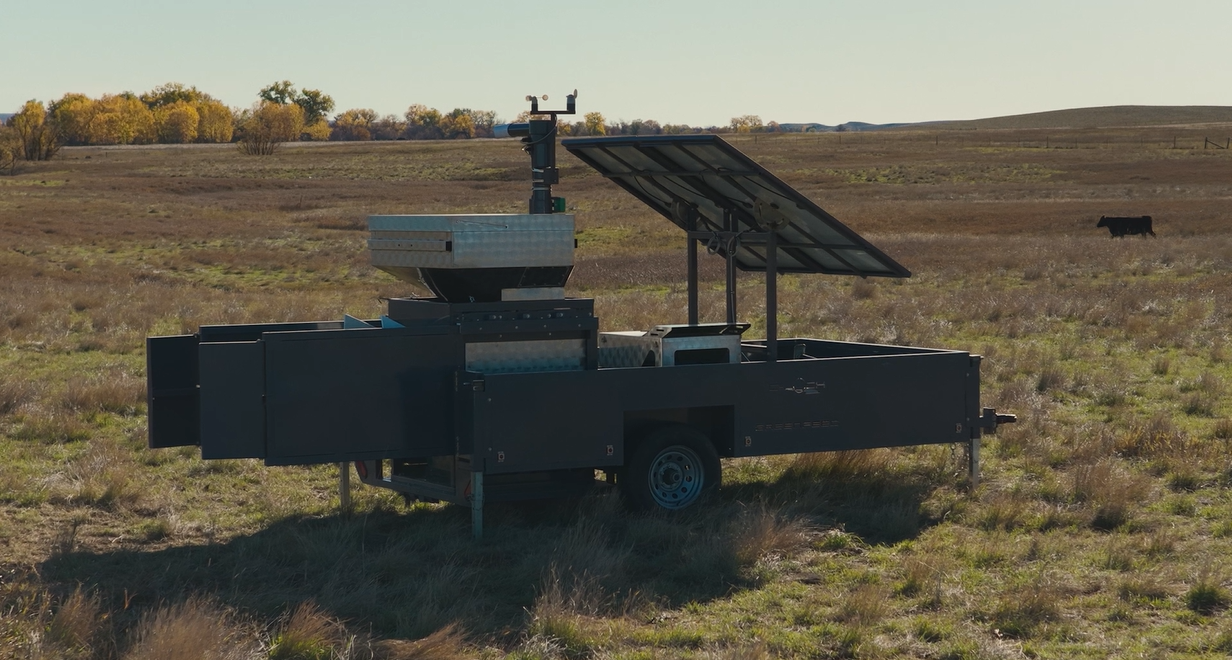
As methane research expands globally, researchers are also working toward greater consistency in how methane data is collected and reported.
“How do we assess what is a good measurement of methane even?” Place said. “That seems quite basic, but back to that idea of, given our conditions, how many visits to the GreenFeed unit do we feel confident in for us to have a good methane phenotype?”
Researchers are also trying to ensure studies remain transparent so results from different countries and production systems can be compared more accurately.
“We need to test in many environments,” Place said. “Cattle production systems are very diverse, and cattle are diverse.”
Place emphasized that methane mitigation strategies must ultimately support producer profitability if they are going to be adopted broadly by the industry.
“At the end of the day, the foundation of a sustainable food system is our producers need to be able to make money and be profitable,” Place said. “So, it all has to come back to that reality.”
For now, Place says the industry is still in the early stages of understanding how methane traits should fit into breeding programs and sustainability systems, but it’s moving in the right direction.
To learn more about C-Lock, visit their website: https://www.c-lockinc.com/


Sarah Mikesell
Sarah Mikesell grew up on a five-generation family farming operation in Ohio, USA, where her family still farms. She feels extraordinarily lucky to get to do what she loves - write about livestock and crop agriculture. You can find her on LinkedIn.