Weekly protein report: Butter jumps as CME dairy markets trend higher
Cash butter closed at $1.87 with the weekly average up sharply, while 40-lb blocks and barrels also posted gains at the CME.
 1 March 2026
 13 minute read
 By:
By: Cattle futures markets once again show resilience
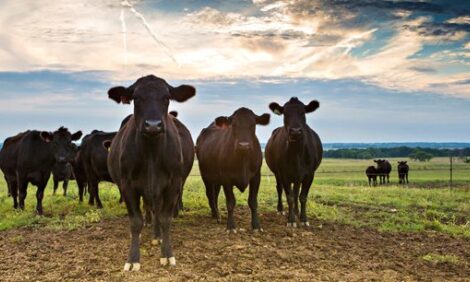
April live cattle on Wednesday rose $1.175 to $240.275. March feeders gained $1.20 to $366.30. The cattle futures market bulls Wednesday did what they’ve done several times the past few months: show resilience and strength on price pullbacks to keep price uptrends alive and maintain their technical edge. Traders are awaiting cash cattle trade to develop this week, with notions that packers won’t be willing to pay higher money for animals because their cutting margins are deep in the red. USDA at midday Wednesday reported no cash cattle trading yet this week. The agency Monday reported cash cattle trading last week averaged $246.91, up $1.29 from the week prior.
Trump administration preparing to pursue targeted fixes to US–Mexico–Canada Agreement
US Trade Representative Jamieson Greer is outlining a strategy aimed at closing what he described as market-access and enforcement gaps in the pact. Speaking in an interview with Bloomberg TV, Greer said the agreement broadly works but does not deliver the level of access the US expected in several key sectors.
According to Greer, the administration’s approach will not necessarily reopen the entire trade deal but instead add separate protocols with Canada and Mexico that would be attached to the existing framework. The move suggests a narrower renegotiation strategy focused on specific disputes rather than a full rewrite.
Key areas the US wants to address:
Canadian dairy and alcohol access. Greer also flagged complaints that Canada is limiting shelf access for certain US dairy and alcohol products. The US has previously challenged Canada’s dairy quota systems through USMCA dispute panels, and those tensions appear to be resurfacing as part of this broader push for revisions.
Trump on beef prices
“The price of eggs is down 60%," President Trump said, in his State of the Union address. "The cost of chicken, butter, fruit, hotels, automobiles, rent is lower today than when I took office, by a lot. And even beef, which was very high, is starting to come down significantly. Just hold on a little while, we're getting it down. And soon you will see numbers that few people would think were possible to achieve just a short time ago.” Beef and veal prices saw a monthly decline of 0.4% in December, according to the January Consumer Price Index, but were up 15% from January 2025.
New World Screwworm rumors trigger volatility — but fundamentals hold
Southern Ag Today analysis shows how headline-driven panic briefly overwhelmed tight cattle-supply fundamentals in January futures trading
A new analysis from Eunchun Park published in Southern Ag Today highlights how rumor-driven market psychology — rather than underlying cattle fundamentals — sparked a sharp but temporary sell-off in feeder cattle futures on January 16, 2026.
The episode offers a clear lesson for cattle producers navigating a market currently defined by two competing forces: historically tight cattle supplies supporting prices, and rising anxiety surrounding the potential spread of the New World Screwworm (NWS).
Tight supplies vs. headline risk. According to Park’s assessment in Southern Ag Today, the US cattle herd remains at its lowest level in decades, creating structural supply support for higher prices. Normally, such tight supply conditions would keep futures markets firm.
However, since late 2025, the possibility that New World Screwworm could spread northward has inserted a significant “risk premium” into the market. That means price action is being influenced not only by physical fundamentals but also by fear of potential trade disruptions or disease-related restrictions.
Jan. 16: A case study in market psychology. The tension between fundamentals and fear became clear on Friday, January 16, 2026, when unverified rumors circulated claiming NWS had been detected in Texas or New Mexico.
Park notes that feeder cattle futures reacted instantly:
- Futures opened near $364.60/cwt
- Panic selling accelerated as rumors spread
- Prices plunged to roughly $355.30/cwt, nearly a $10 drop
- Trading approached “limit down” territory before partially recovering
- The market ultimately closed near $356.15/cwt
Trading volume surged during the decline, signaling a broad rush to exit positions rather than a change in actual supply conditions.
Data shows headlines — not fundamentals — drove the sell-off. Park’s analysis uses intraday pricing data combined with Google search activity to illustrate the cause of the crash.
As online searches related to NWS rumors spiked, both trading volume and selling pressure surged simultaneously — suggesting that information flow and algorithmic trading amplified fear-driven moves rather than reflecting real changes in cattle availability or demand.
The takeaway from Southern Ag Today’s analysis: the sell-off was largely psychological, triggered by headlines rather than physical market shifts.
US beef imports expected to rise in 2026
Tight cattle supply drives higher imports as processors and policymakers look abroad to stabilize prices
US beef imports are projected to increase by up to 3% in 2026, according to USDA projections, as the US cattle herd remains near multi-decade lows and domestic slaughter supplies stay tight. The supply shortfall is pushing meatpackers to rely more heavily on imported beef to meet demand.
Imports already surged 16% in 2025 to roughly 2.45 million metric tons, reflecting the shrinking number of slaughter-ready cattle. The strain on supply has contributed to operational pressure across the industry, with large processors such as JBS, Tyson Foods and Cargill announcing plant closures earlier this year.
Brazil is positioned as a major beneficiary of sustained US demand. Analysts expect the American cattle shortage to extend into 2027, supporting continued strong imports. Brazilian data show the US had already used about 73% of its annual tariff-rate quota by early January 2026, signaling aggressive early buying. In 2025, the quota was fully utilized by mid-January, highlighting how quickly US demand is absorbing available supply.
Brazilian exporters have responded accordingly, with shipments to the US rising about 33% year over year, making the US one of Brazil’s top beef destinations prior to additional tariff actions.
Meanwhile, expanded tariff-rate quota access for certain trade partners — including Argentina — could further diversify supply sources. President Donald Trump’s executive order in February to expand Argentine beef imports reflects the administration’s effort to ease domestic meat prices by increasing supply.
Market analysts say expectations of stronger US buying are already supporting cattle futures, while ongoing herd contraction and livestock disease issues in Mexico may keep regional supplies tight. Overall, import demand is expected to remain elevated as the US beef sector works through a prolonged rebuilding cycle.
Australia beef exports to US will be exempt from tariffs
Australia, one of the biggest foreign suppliers of beef to the US, will keep its exemptions from President Trump’s tariff regime, reported Bloomberg. “Beef shipped to the US won’t face the new 15% tariffs announced by Trump on Saturday, Meat & Livestock Australia Managing Director Michael Crowley said in a statement today. The industry body confirmed the exemption in a conversation with their counterparts in the US, a Bloomberg report said. In November, the Trump administration announced that beef imports to America would be exempt from tariffs as part of a plan by the government to tackle rising food costs for consumers.
USDA cattle-on-feed data leans bullish
USDA last Friday afternoon reported cattle and calves on feed for the slaughter market in the US for feedlots with capacity of 1,000 or more head totaled 11.5 million head on February 1, which is 2 percent below February 1, 2025. Placements in feedlots during January totaled 1.74 million head, 5 percent below 2025. Those numbers were close to market expectations but still lean price-friendly. Net placements were 1.68 million head. During January, placements of cattle and calves weighing less than 600 pounds were 360,000 head, 600-699 pounds were 365,000 head, 700-799 pounds were 455,000 head, 800-899 pounds were 381,000 head, 900-999 pounds were 105,000 head and 1,000 pounds and greater were 70,000 head. Marketings of fed cattle during January totaled 1.63 million head, 13 percent below 2025. Other disappearance totaled 55,000 head during January, 8 percent below 2025. Cattle and calves on feed for slaughter market for feedlots with capacity of 1,000 or more head represented 82.7 percent of all cattle and calves on feed in the United States on January 1 versus 82.5 percent on January 1, 2025. Marketings of fed cattle for feedlots with capacity of 1,000 or more head during 2025 represented 87.1 percent of total cattle marketed from all feedlots in the United States, down slightly from 87.2 percent during 2024.
US/Indonesia trade deal opens major new path for US red meat exports
USMEF says agreement removes key import barriers, sets purchase commitments, and could unlock up to $500 million in export value
The US Meat Export Federation (USMEF) welcomed the newly announced US/Indonesia Agreement on Reciprocal Trade, calling it a significant breakthrough for US beef and pork exporters seeking expanded access in Southeast Asia.
According to the statement from USMEF President and CEO Dan Halstrom, Indonesia has been a top priority for the US red meat sector during recent trade negotiations. The industry views the market as strategically important — especially as US beef exporters look to diversify sales channels and offset reduced access to other major Asian destinations.
Beef market access seen as the biggest gain. USMEF says Indonesia has been largely inaccessible to US beef because of:
- A restrictive import licensing system
- Effective caps limiting volume
- Non-tariff barriers that constrained consistent supply
The new agreement reportedly addresses those barriers, which USMEF believes could allow Indonesian buyers to gain reliable, sustained access to US beef for the first time at scale.
A key component is a 50,000 metric ton annual purchase commitment, which aligns with USMEF’s own market potential analysis. The group says this volume target could help ensure Indonesia follows through on implementing the deal’s provisions rather than maintaining informal restrictions.
If fully implemented, USMEF projects US beef export value to Indonesia could reach $400 million to $500 million in the near term.
Pork exports also expected to expand. Beyond beef, USMEF highlighted meaningful gains for US pork exporters. The agreement is expected to:
- Remove import licensing constraints
- Expand approval for US processing plants
- Open opportunities for further-processed pork products
These changes could allow US pork shipments to grow in a market that historically limited market access through regulatory barriers.
Weekly USDA dairy report
CME GROUP CASH MARKETS (2/20) BUTTER: Grade AA closed at $1.8700. The weekly average for Grade AA is $1.7650 (+0.0945). CHEESE: Barrels closed at $1.4900 and 40# blocks at $1.4975. The weekly average for barrels is $1.4700 (+0.0300) and blocks $1.4894 (+0.0784). NONFAT DRY MILK: Grade A closed at $1.6850. The weekly average for Grade A is $1.6238 (+0.0243). DRY WHEY: Extra grade dry whey closed at $0.6800. The weekly average for dry whey is $0.7250 (+0.0030).
BUTTER HIGHLIGHTS: In the West and Central regions domestic butter demand is steady. In the East region domestic butter demand varies from steady to strong. Export demand varies from steady to strong across the country. Although cream production is strong, spot load availability is tighter in some parts of the West region. Cream demand from butter manufacturers is stronger. Butter production schedules are busy and generally running churns seven days a week. Availability of 80 percent butterfat butter spot loads is stable, but some stakeholders note loads with more recent production dates are tighter. 82 percent butterfat butter spot loads are tight. Bulk butter overages range from 3 cents below to 12 cents above market across all regions.
CHEESE HIGHLIGHTS: Eastern region cheese production is strong, with most plants running six to seven days a week on contractual milk, supplemented by some spot loads. Retail demand for cheddar and specialty cheeses is steady, while bulk output is lighter. Inventories are balanced, and exports help manage excess. Central region milk output is seasonally high, supporting active cheese production. Spot milk trades are light, and cheesemakers rely on internal supplies. Barrel demand is strong, retail and food service are steady and competitive pricing drives export interest. Inventories meet current needs. Western region milk covers committed volumes, though spot availability varies. Cheese production is strong, supported by steady retail and moderate foodservice demand. Export interest ranges from steady to strong. Inventories are stable, with spot cheese loads accessible.
FLUID MILK HIGHLIGHTS: Nationwide milk production ranges from steady to seasonally strong. For the most part, volumes are sufficient to keep plants running busy production schedules. Milk fat content remains higher than this time last year. Class I production is steady to strong across all regions. Bottlers are taking in full contract loads and, in some cases, spot loads to meet current demand. Class II production is increasing as many facilities prepare for Spring and Summer demand. Contacts report increased spot purchases of cream from Class II manufacturers. Class III production is steady nationwide, with some facilities taking in spot loads of milk and condensed skim to keep vats full. Class III milk prices range from $2-under to $1-over Class. Spot sales activity was slower this week. Class IV production is strong. Butter and milk powder prices are on the rise, and manufacturers are taking advantage of the opportunity by keeping busy production schedules. Condensed skim demand increased this week. Some contacts report difficulty securing spot loads. Cream multiples for all Classes range:1.10– 1.35 in the East; 1.00– 1.25 in the Midwest; 0.80 – 1.20 in the West.
DRY PRODUCTS HIGHLIGHTS: Nonfat dry milk (NDM) prices were mostly higher across all regions, except for a slight decline at the high end of the low/medium heat range in the West and no change at the high end for high heat in the West. The largest increases occurred for low/medium heat in the Central and East, where tight inventories and limited spot availability have some buyers struggling to secure immediate needs. Dry buttermilk prices were mixed, with notable gains at the low end in the Central and East while holding steady at the high end; in the West, prices rose at the low end but fell at the high end of the price range, with the mostly range unchanged. Dry whey markets were also mixed: the Central region price series slipped slightly at the low end and held fixed at the high end, while the West price range edged up at the low end and down at the high end, leaving the mostly range steady; the Northeast declined across the range. Lactose prices advanced at the low end of the price range and across the mostly series, supported by strong demand and tight inventories. Whey protein concentrate 34% strengthened across the price series, except for firmness at the high end of the mostly range. Dry whole milk prices were stable at the low end and higher at the high end, while acid and rennet casein prices remained unchanged.
ORGANIC DAIRY MARKET NEWS: The NOP Organic Insider from February 10th discussed the publication of the 2026 Sunset Review and Substance Renewals covering the list of substances allowed or prohibited for organic crop and livestock production. The AMS reported December 2025 estimated fluid product sales. of total organic milk products was down from the previous year and 2025 total organic milk products sales were down percent compared to 2024. Monthly export data from FAS covering organic milk categorized as HS-10 code 0401201000 for December 2025 indicated organic milk exports were up from the month prior, but down from December 2024. Exports of organic milk from the start of the year through December are up compared to 2024. In the week 8 retail survey, organic dairy ads increased and most organic ads are for milk.
Malaysian palm oil futures weaker
Malaysian palm oil futures dipped below MYR 4,050 per MT on Thursday, extending the previous session’s subdued tone as losses in Dalian palm oil and Chicago soyoil weighed on sentiment. Prices hovered around a one-week low, pressured by a firmer ringgit and weak export performance, despite seasonal demand linked to Ramadan and the upcoming Eid al-Fitr festival. Cargo surveyors estimated that Malaysian palm oil shipments for February 1–25 dropped between 12.1% and 16.1% compared with the same period in January, reinforcing downside pressure. Still, the broader outlook remains mixed. Demand from India, the top buyer, is expected to recover in 2026 amid improved price competitiveness, with imports potentially hitting 800,000 MT. Meanwhile, crude oil prices held near multi-month highs amid heightened geopolitical tensions, lending some support to the edible oils complex. The Malaysian Palm Oil Council expects prices to consolidate within the MYR 4,000–4,300 per MT range in March.