World Dairy Expo: Feedworks' product line boosts efficiency in dairy cattle, herd health
Learn more about Feedworks' diverse product line & ongoing research
 8 January 2026
 5 minute read
 By:
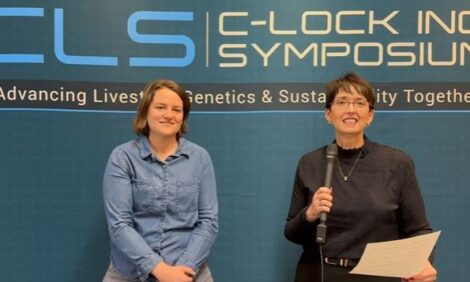
By: Becca Culbertson, technical support manager at Feedworks, and Don Larson, technical ruminant sales manager at Feedworks, were interviewed by The Dairy Site's Sarah Mikesell at World Dairy Expo in Madison, Wisconsin, USA.
What products does FeedWorks offer to US dairy producers?
We have a carefully curated portfolio of dairy products. We offer a range of products such as Calmin, a calcified marine algae that's a multifunctional buffer and available source of calcium, magnesium and 72 other trace minerals. We've got ETX-5, which is a broad spectrum toxin mitigation product. ELife is another popular product that’s a potent polyphenol-based antioxidant that can help spare some vitamin E in the diet. We've got Salmate, which is an encapsulated fish oil product that can help reduce inflammation and help with reproduction. Agolin Ruminant is an essential oil blend used to boost efficiency in dairy cattle. In addition, we have our very own Feedworks Lytes line as well, which is a range of different electrolytes support that helps maintain hydration in various scenarios. We've got a diverse product selection and a lot of great research projects that are ongoing. Producers should keep up with us and see what we have in the pipeline.
How is mycotoxin affecting production this year?
The last few months have been fairly quiet. We’re in a quiet spell, but with some of the stressors that we had with early rainfall, we'll start to hear more as it moves in. We follow what the labs are telling us and what they're seeing in different regions. Of course, it's spread out across the country, but we're going to have some challenges as we move into winter and new crops are planted. Right now, new corn silage is coming on but it’s too early to tell.
What is your advice around how producers can help mitigate some of the effects of mycotoxins in their feed?
The first phase is proper feed management, pack your bunkers correctly, put in the right moisture and handle that feed correctly from the start. You will still be dealing with some toxins. Then the next phase is starting with a healthy cow. Make sure the immune systems are where they're supposed to be. We have the correct energy balance and protein balance in those diets. Then be aware of what you are dealing with so that you're using the correct products that can maintain that balance, the health of the cow and mitigate the toxins themselves, whether it's through binding or through mitigation and denaturing those toxins.
Is testing for mycotoxins useful in this case?
Testing is particularly useful, but it’s not always accurate. You can take a lot of samples and not find the root problem. Being aware of what's happening in your area and knowing which toxins other people are dealing with makes a big difference. Looking at the lab websites to know what they're seeing in different areas is a great tool. Sometimes testing is not enough. You need to treat those cows, keep them healthy, and you'll see responses on the cows, whether you found it in the lab or not.
Feeding safe, high quality feed, and keeping that rumen going is important. What are some of the things you're working on regarding buffering and maintaining an optimal rumen pH?
Keeping the rumen stable is one of the biggest keys to cow health and performance. We know that early lactation cows are especially vulnerable in this period. When that pH is dipping too low, you're going to start to see not only reduced fiber digestion, but also those metabolic ripple effects that can really impact milk production and animal health.
One area that we've been focused on is definitely looking beyond adding just any buffer or mineral source. What we're finding is how soluble and how functional those minerals are in the rumen. You want to be using a multifunctional buffer to get more bang for your buck.
Dr. Benjamin Wenner, with FeedWorks USA, has presented some really interesting research at ADSA this past July. He showed that different magnesium sources are going to vary widely in their solubility from nearly 0% to nearly 100%. We're seeing on the label that percentage magnesium doesn't necessarily always reflect what the cow is seeing. With Calmin, a unique calcified marine algae source with an extremely high surface area, we consistently see high solubility of both the calcium and magnesium in the product. We're not only supplying bioavailable calcium and magnesium, but it's also giving that sustained dynamic buffering effect to help neutralize acid over time, which is pretty neat.
The rumen affects cow health and that's important especially around transition. What are you seeing as opportunities to keep cows on a healthy path during that critical transition period?
There are some big opportunities in two areas. One suggestion is just keeping the rumen as stable as possible. We want consistent feeding, effective fiber and functional buffers and mineral sources. That'll help the cows maintain their intake and energy balance through this challenging time. Secondly, I'd say there's growing recognition now that systemic inflammation and chronic systemic inflammation are absolutely a hidden cost during this period. We want to support the cows as much through the diet as we can. That might mean antioxidant strategies, bioavailable trace minerals and different additives that target inflammation. We also have bio actives that target inflammation that is going to be very promising and help us to limit inflammation during this time.
As we look to 2026, what are some of the things producers will need to keep in mind when they think of nutrition and ration building?
Something to keep in mind is hidden stressors. We're learning more and more. There's a lot happening under the surface that we can't see. We want to build resilience to things like mycotoxins, oxidative stress, and chronic low-grade inflammation. These don't always show up in the bulk tank report right away. We want to be proactive because they are going to chipping away at performance over time.
We're seeing a lot more interest in using layered strategies, broader spectrum approaches and pairing mycotoxin mitigation tools with added dietary support. This helps those cows cope with any sort of underlying oxidative stress inflammation that will result from that by using a lot of antioxidants and phytogenic feed additives. That's important and will help cows in combatting challenges that might not be visible to producers.
Boosting efficiency is always a big part of the conversation. Producers want to know how they can get more. That might look like supporting transition cows using anti-inflammatory tools. We have omega-3s, using plant-based additives and essential oils that'll help boost feed efficiency and milk production. Looking towards those science-backed solutions are going to help the cows during those periods of extra stress and just help them produce more. That's what's going to separate the good from the great in 2026.

Sarah Mikesell
Sarah Mikesell grew up on a five-generation family farming operation in Ohio, USA, where her family still farms. She feels extraordinarily lucky to get to do what she loves - write about livestock and crop agriculture. You can find her on LinkedIn.