NZ dairy sector ramps up feed and fertiliser imports
Palm kernel imports hit record high to support milk output
 19 June 2026
 1 minute read
 By:
By: Elevated imports of supplemental feed and fertiliser are expected to continue supporting New Zealand's 2026 milk production, according to the USDA Foreign Agricultural Service's semiannual dairy report.
Both import categories declined substantially in 2023, which the report attributed largely to financial pressure on farmers from high interest rates on debt, leading to reduced feed purchases and deferred fertiliser applications.
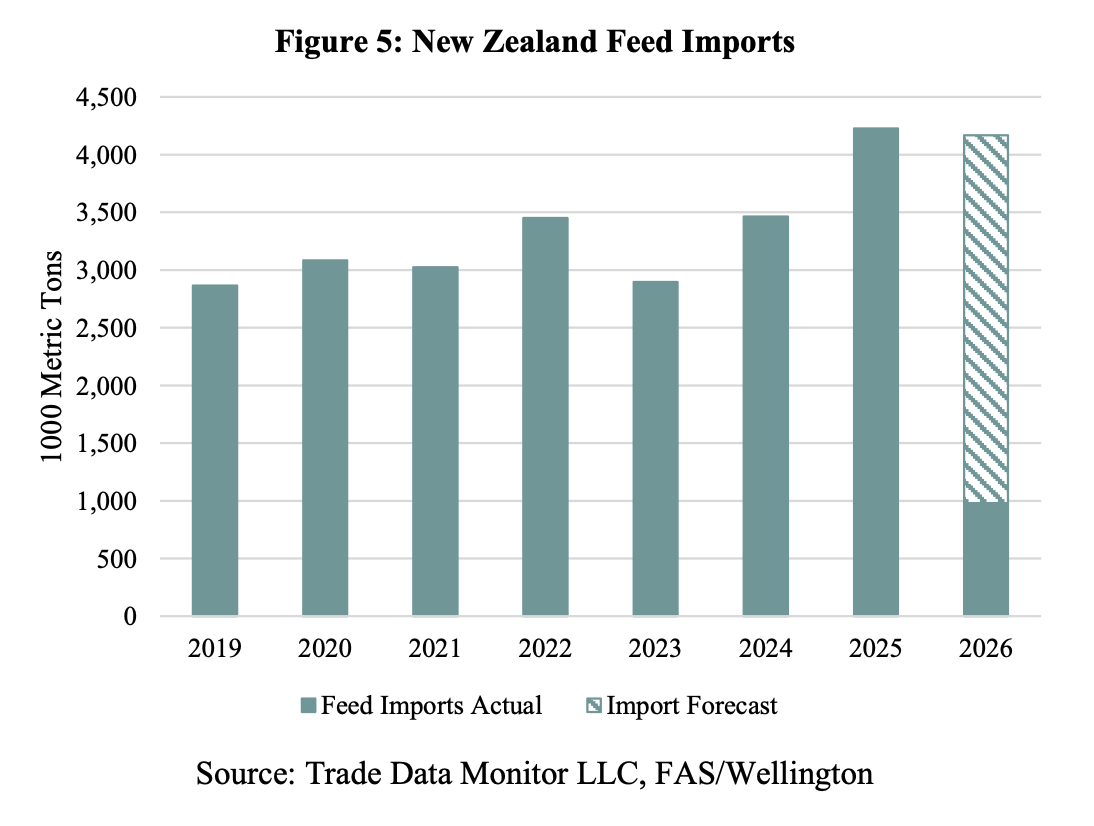
The dairy sector accounts for roughly 75% to 80% of imported animal feed in the primary sector. Palm kernel expeller (PKE) is the predominant imported feed, making up approximately 60% of total imports. PKE imports have averaged 1.9 million metric tons annually over the past six years, but reached 2.6 million metric tons by the end of 2025, the highest volume ever imported into New Zealand in a single year. FAS/Wellington expects PKE demand to remain strong due to high dairy prices, alongside continued growth in imports of feed types such as dried distillers' grains soluble (DDGS) and soybean meal.
DDGS is the second-largest imported feed category, accounting for just over 15% of total feed imports. Year-to-date imports in marketing year 2026 rose 87% compared with the same period a year earlier. The US is a major supplier of this feed, with American exports increasing more than 60% by the end of 2025 compared with the previous year.
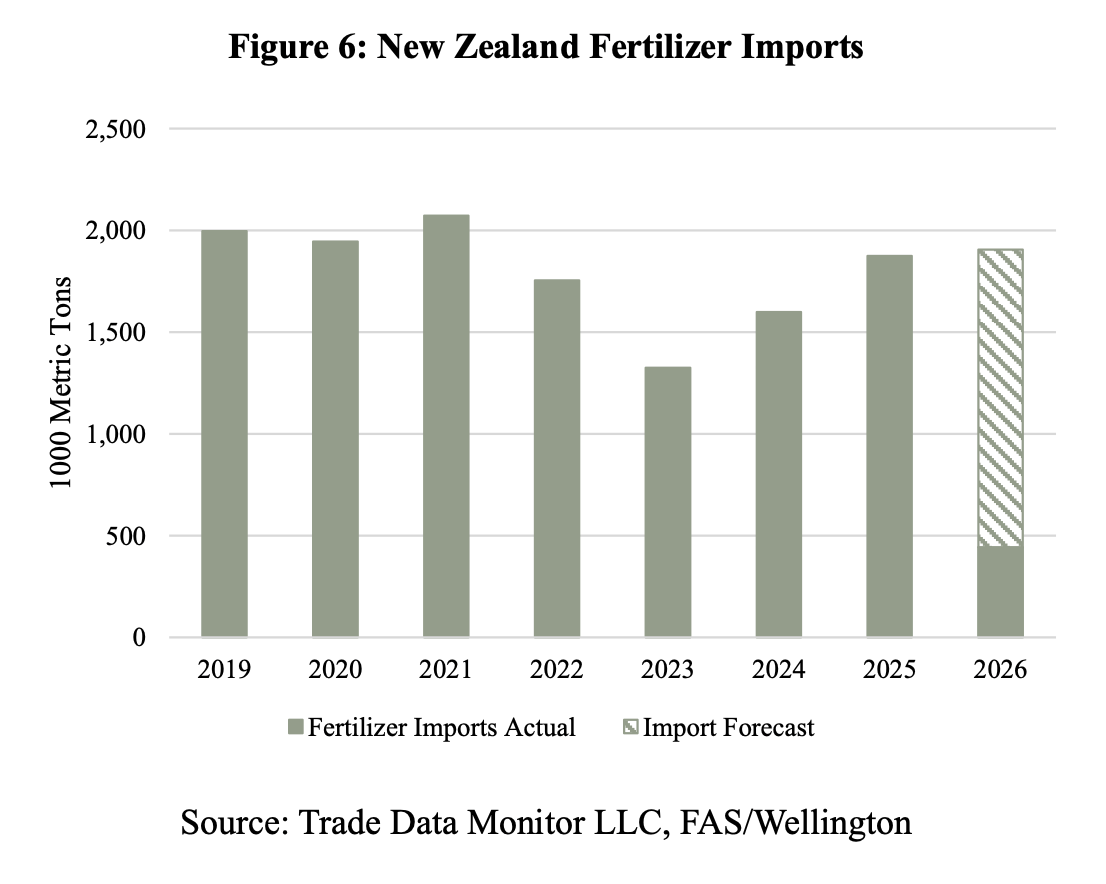
FAS/Wellington expects fertiliser imports in MY 2026 to remain consistent with 2025 volumes. New Zealand's major imported fertilisers are urea, diammonium phosphate and phosphate rock, the latter of which is processed domestically for on-farm use. Fertiliser imports rose 17.6% in the first three months of 2026 compared with the same period last year, while phosphate rock imports increased more than 60% year over year.
Phosphate is a critical nutrient for sustaining long-term pasture productivity in the dairy sector, and the report said increased applications in the previous and current marketing years will contribute to higher milk yields through improved feed from grazed pasture.