Brazil's corn ethanol boom adds new pressure to global feed markets
Fertiliser shortages and Trump-Xi summit could complicate decisions
 13 May 2026
 3 minute read
 By:
By: Brazil is planting more corn than ever. Driven by rising demand from the domestic ethanol industry and strong margins, analysts forecast increased production in key areas. For global feed markets, that should be reassuring. But it isn’t. The same geopolitical forces accelerating Brazil's ethanol expansion are pushing Brazilian farmers toward soybean production.
Nan-Dirk Mulder, Senior Global Specialist Animal Protein at Rabobank, laid out the forces at play, at the WEO Business Conference in Warsaw in April. The conflict in Iran, fertiliser shortages, shifts in global soybean trade flows and the rising probability of El Niño all add immediate pressure to global feed markets. Brazil’s ethanol expansion, however, will be a slow burn.
“This is really a big theme in Brazil," Mulder said. "If you talk with producers about corn, much more is going now to the ethanol sector."
From cane to corn
Brazil's ethanol industry was built on sugarcane, but that is quickly changing. Twenty new corn-based plants are currently under construction across several states. Several sugarcane-based facilities have closed as a result.
Mulder compared the scale of the shift to the US corn ethanol expansion of a decade ago, a development that permanently reallocated a significant share of American corn away from the feed to the biofuel market.
According to a USDA Foreign Agricultural Service report published in April 2026, Brazil now operates 31 corn ethanol plants with a combined production capacity of 12.93 billion litres per year, with a further 20 under construction.
The USDA forecasts corn planted area expanding to 23 million hectares in the 2026/27 marketing year, up from 22.8 million the previous season, with total production expected to reach 136 million metric tonnes. Strong ethanol demand is a primary driver.
Brazilian policy is reinforcing that drive. On 30 April, President Luiz Inácio Lula da Silva announced that Brazil will raise the mandatory ethanol blend in gasoline from 30% to 32%. The biodiesel blend is also set to increase from 15% to 16%, according to Reuters. More corn will be required to fulfil those higher mandates, a shift that will heighten corn’s feed versus fuel competition.
Currently, about 60% of corn used in Brazil goes to animal feed, but ethanol's share is rising with every year. Feed buyers are already competing with a well-capitalised and expanding sector. Evolving Energy and Mines Ministry policy suggests that competition will intensify.
Planting window as the pressure point
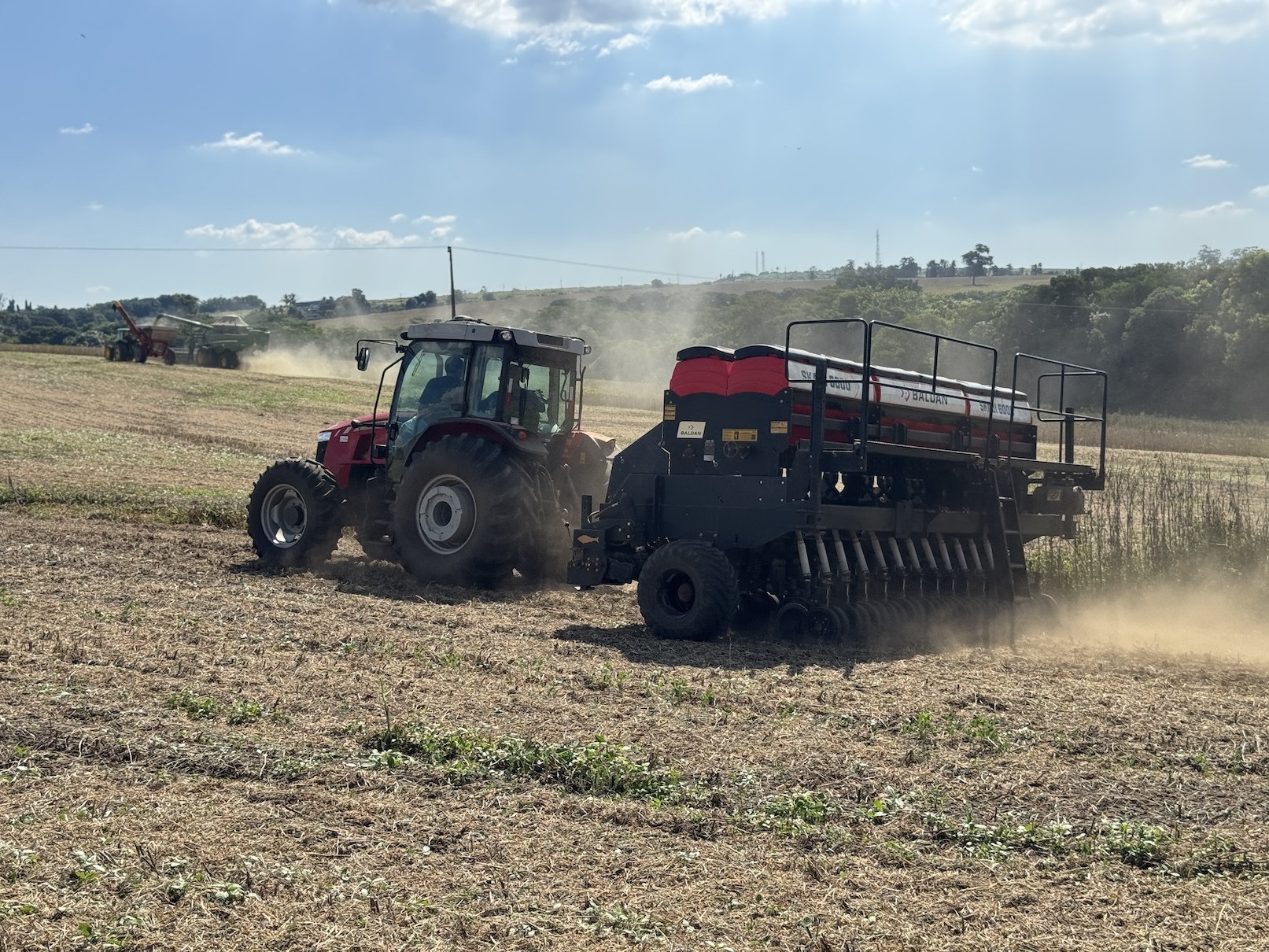
Corn supply isn’t just driven by demand though. There are other factors at play that shape farmers decisions. Disruptions to Gulf fertiliser supply chains have pushed urea prices up 26%. As corn is the most nitrogen-hungry of the major feed crops, this puts a question mark on planting decisions. When fertiliser prices are too high – or fertiliser is entirely unavailable - soybeans provide a safe second choice, especially as they fix their own nitrogen.
Another factor moving the needle on planting decisions is trade. China buys around 60% of globally traded soy. In 2025, it redirected purchases away from the US toward Brazil, adding further incentive to plant soy.
Brazil's next planting window runs from June to September. If the Iran conflict remains unresolved by then, Mulder warned, those economics could push more Brazilian farmers toward soybean. Less corn means tighter feed supply. More soy means greater meal availability. However, the tension doesn’t stop there. Prices could quickly reverse if a US-China trade agreement redirects Chinese purchasing. The Trump–Xi summit is scheduled for 14–15 May in Beijing,
"If that changes, it is a big change," Mulder said.
The broader picture
For now, global grain stocks are providing some cushion. US corn production is forecast up around 5% in 2026, wheat conditions across Europe and the Black Sea are significantly better than last year, and global wheat stock-to-use ratios have returned to their long-term average. Brazilian soybean output is strong and futures are trending downward, supportive of feed costs in the short term.
But corn remains the most exposed commodity. Adding further uncertainty is the rising El Niño probability. The weather pattern could disrupt Southern Hemisphere growing conditions with prolonged periods of drought.
"I think there is more upside risk than downside risk in the current situation globally," Mulder concluded.
For livestock and feed producers, procurement discipline, feed formulation flexibility and forward planning are fundamental risk mitigation tools that should be a part of every farmer’s long-term plan.
The World Egg Organisation (WEO) was previously called the International Egg Commission (IEC).

Melanie Epp
Melanie Epp is a freelance agricultural journalist from Ontario, Canada.